


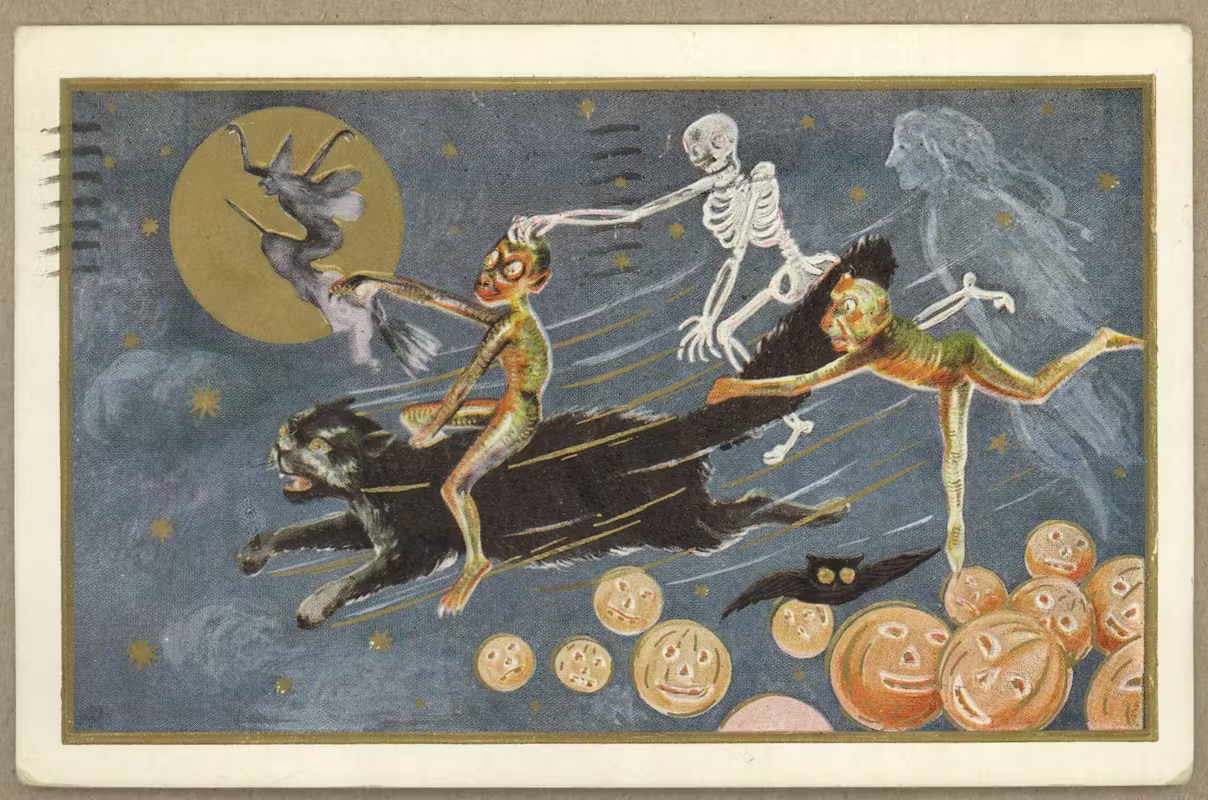
Vintage Halloween postcard illustration (ca. 1913). Courtesy of the Public Domain Image Archive, originally from the Toronto Public Library, Public Domain U.S.
Every year around the last week of August, it happens. The weather barely cools down. Starbucks rolls out its pumpkin spice latte like clockwork, and suddenly millennials everywhere are screaming in unison: “It’s spooky season witches!” (Or at least this millennial is.)
Halloween isn’t just a holiday for us, it’s a personality trait. It’s nostalgia therapy. It’s a seasonal rebrand for an entire generation that grew up on Goosebumps covers, emo eyeliner, and Scooby Doo marathons.
But why is spooky season so much more than October 31st for millennials? Why do we treat it like a two-month-long festival instead of a single holiday? Let’s dig into the cultural breadcrumbs: paperback horror, mall goths, PSLs, and nostalgic trauma.
Goosebumps, Fear Street, and the Horror That Raised Us
Millennials weren’t raised gently, we were raised on fear street.
- Goosebumps: R.L. Stine’s neon-colored paperbacks stared at us from every elementary school shelf. “Say Cheese and Die” wasn’t a metaphor. Before Ryan Gosling starred in the TV adaptation, this book was the reason half of us refused to even touch disposable cameras. They were loaded weapons in our minds.
- Fear Street: By middle school, I was consuming every single Fear Street book I could get my hands on. I LIVED for these books. It was middle school melodrama turned horror… because apparently acne and algebra weren’t terrifying enough.
- Scary Stories to Tell in the Dark: Don’t even get me started. Those illustrations? Straight from Satan’s sketchbook.
When I was a kid, reading was my escape and I had always loved the horror genre. I wasn’t the “horse girl book” kid or even the “babysitters club” kid. I was the one digging through the library shelves looking for the creepiest cover I could find.
No wonder spooky season feels like home. It’s the one time of year our childhood fears feel… socially acceptable.
Are You Afraid of the Dark? (Yes. Always.)
While Gen Z had TikTok jump scares, millennials had one of the most traumatizing kid shows ever: Are You Afraid of the Dark?
Every week, the Midnight Society gathered around the campfire, tossed some “mystical dust” (probably Nesquik) into the flames, and told stories designed to permanently scar us. Haunted dollhouses. Creepy clowns. Mirrors that didn’t reflect back. And don’t even get me started on the Pinball Wizard.
This wasn’t family-friendly Halloween stuff. I’m convinced Nickelodeon was just low-key prepping us for corporate America. The constant dread, the ghostly bosses, the sense that your soul could be stolen at any moment, it was just foreshadowing adulthood.
And if you had older siblings like I did, you were already watching the big horror movies way earlier than you should’ve been.
Casper and the Soft Side of Spooky
Of course, it wasn’t all trauma. We also got Casper, the “friendly ghost” who made death weirdly adorable. Devon Sawa’s appearance in the 1995 movie didn’t just awaken a generation. It cemented Halloween as a season of longing, nostalgia, and teen angst.
Casper showed us that spooky could be soft. That ghosts could be crushable. That death could come with a smile and a swoopy haircut.
This blend, half terrifying (Fear Street) and half tender (Casper), is exactly why millennials worship spooky season. It balances the chaos with a little bit of comfort.
The Emo Phase: Our Adult Spooky Season Training
By the time we hit high school, the paperback horrors evolved into mall culture. Enter: the emo phase.
Hot Topic became our haunted temple.
- Black nail polish.
- Band tees with fonts so sharp they could cut you.
- Spiked belts and eyeliner smudged like raccoon eyes.
We were lived Halloween daily. Our playlists were haunted houses of their own. My Chemical Romance, AFI, The Used, all basically telling us that spooky vibes = survival.
The emo phase wasn’t a phase. It was Halloween training camp. It taught millennials to aestheticize darkness. To wear our sadness like a costume. To make morbidity fashionable.
So when spooky season rolls around? It’s like a class reunion. Only with less eyeliner and more pumpkin spice. (But I better not see any UGG boots in sight).
Seasonal Depression’s Arch Nemesis: Spooky Season
I’m going to be honest. A big part of why we millennials cling to spooky season is mental health. September to November is the bridge between summer burnout and winter depression.
Spooky season acts like an emotional weighted blanket:
- Pumpkin patches: Free therapy with gourds.
- Corn mazes: Adult hide-and-seek with serotonin.
- Pumpkin spice lattes: Sugary self-care in a cup.
- Costumes: Temporary escape from late-stage capitalism.
We can’t control rent prices or broken healthcare systems. But we can control how many skeletons are sitting in the garden this year.
Spooky season gives structure to chaos. A reason to celebrate when everything else feels unsustainable. One string of pumpkin lights and my serotonin levels rise like Dracula at sundown. Our family has a tradition to start decorating inside on August 31st. It may feel too early to you but it’s our tradition.
We just enjoy the ritual of it. Plus it takes so long to decorate that I never want to rush it. I want to enjoy my seasonal decor.
Pulling out bins of skeletons and ghosts like it’s Christmas morning, arguing over where the giant spider should go this year. Letting the kids pile every pumpkin they can find onto the mantle until it looks like a gourd hoarder lives here. Doing our silly annual
The Rise of Spooky Marketing (and Why It Works on Us)
Brands aren’t dumb, they know millennials can’t resist spooky vibes. That’s why every fall, companies roll out campaigns drenched in ghosts, skeletons, and pumpkin emojis.
- Starbucks built an empire on the PSL and it always launches the last week of August.
- Spirit Halloween has mastered the art of swooping in on dead malls like a vulture in a cape.
- Even non-spooky brands (Oreo, Cheetos, Bud Light) go full monster-mode in October.
I even took my kids into Cold Stone Creamery recently and even they had already fully decorated for Halloween.
Millennials eat it up because it’s nostalgia wrapped in capitalism. We see a bag of “Monster Mix Chex” and immediately regress to a Goosebumps sleepover.
Spooky season is the one time of year where we like being marketed to, because it feels like being seen.
Ghosting, Paychecks, and Modern Millennial Horror
Millennials don’t just cling to spooky season for fun. We live in actual horror every day.
- Ghosting: It’s not just a dating term. It’s job interviews, clients, and “let’s circle back” emails.
- Haunted debt: Sallie Mae is scarier than any skeleton.
- Zombie wages: Too many people are still working like it’s 2025 but getting paid like it’s 1995.
In some twisted way, spooky season feels honest. It mirrors the dread we live with, but makes it fun.
Why Millennials Made Spooky Season a Lifestyle
So why did spooky season go from a one-day holiday to a full-blown millennial identity?
Because it was always ours. We were raised on fear (paperbacks, clowns, Goosebumps covers). We grew up with it (emo eyeliner, mall goths, Casper crushes). And we adulted into it (haunted debt, pumpkin spice).
Spooky season isn’t escapism, it’s continuity. It’s the through-line of our lives. A place where we can laugh at what scared us, celebrate what shaped us, and cling to something fun in a world that feels increasingly haunted.
Spooky season is the only holiday that doesn’t sugarcoat reality. It leans into it. Life is scary. The world is haunted. But for a couple of months, we get to own it. To turn the lights down, carve up pumpkins, and say: “Yep. It’s terrifying out there. Let’s party.”
To me, spooky season isn’t just a vibe. It’s a generational coping mechanism.
About the Author


